 AionixOne
Governance for Local Execution
The Control Plane for Local Execution
When scripts and cron jobs start running your business.
Unify scripts, functions, schedules, and legacy systems into a manageable, traceable rule system.
Every execution is traceable — no more guessing from logs
No TRN, no execution — objects must be registered to exist
System state is transferable — not locked in someone's head
Sound Familiar?
Afraid to Debug
Something broke. You dig through logs, guess, ask around.
Afraid to Re-run
Re-running might make it worse. So you don't.
Afraid to Change
The system is frozen. Nobody dares to touch it.
Afraid to Hand Over
When someone leaves, the system becomes a black box.
These systems aren't poorly written — they were just never truly governed.
And when all else fails, critical workflows are tracked in Excel.
One Rule to Govern Them All
AionixOne doesn't add another tool.
It defines what is allowed to exist and execute.
TRN — Tenant Resource Name
All objects must have a TRN
Functions, credentials, schedules, workflows — no TRN means it doesn't exist
All actions are TRN + Operation
Invoke, trigger, modify — one unified pattern
All executions generate a record
Traceable, replayable, auditable
trn:<service>:<tenant>:<type>/<name>Anything that can execute must be governed.
See Everything. Trace Everything.
In one interface, you can see: who the object is (TRN), what it's doing (Operation), and what happened (Execution History).
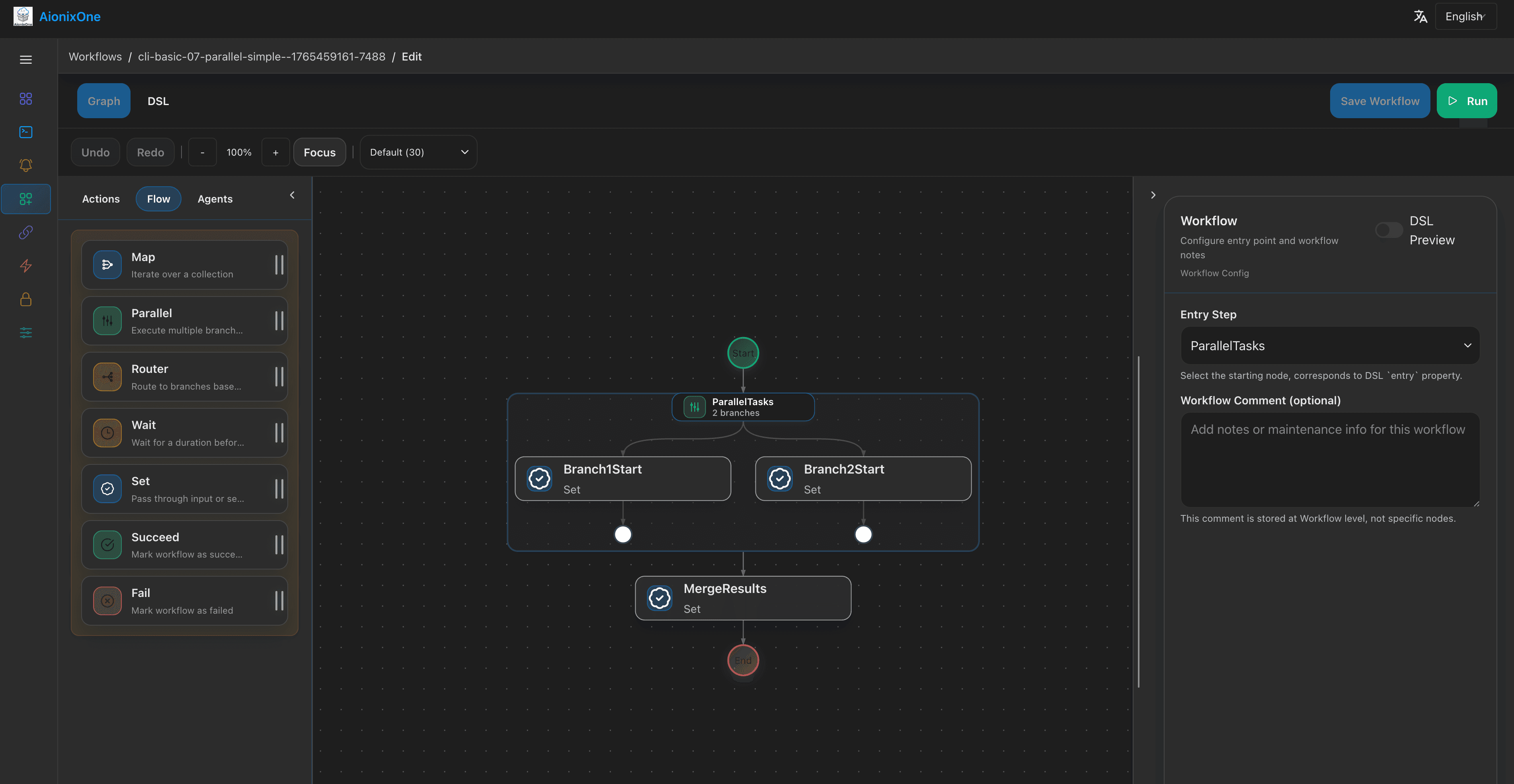
From Chaos to Order
Single binary. Runs locally. Up in five minutes.
No cloud required. No agents. No rewriting.